Beams over Baghdad
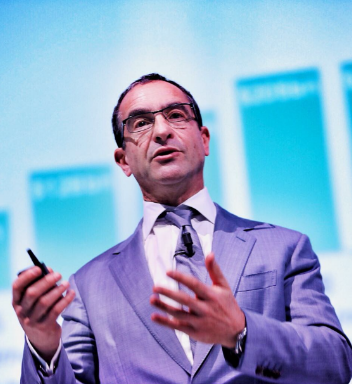
Stephen Claypole
Stephen Claypole

9 September 2003 - by guest columnist and former boss of mine, Stephen Claypole.

Svengali of the TV news industry, Stephen has headed up both Reuters TV and Associated Press Television. In the aftermath of the war in Iraq he was asked to help put Iraqi TV back on air.
This is his account of the unsettling experience...


Baghdad night
Iraq 2003 - a country in in need of decent TV
The lights when they appeared in the dusty gloom of a Baghdad evening caused deep unease among the transmitter engineers and security men working in the debris of the bombed and looted tv headquarters beside the River Tigris.

Torch beams were probing a few hundred yards away along the ninth floor of the equally bombed and looted Mansour Milia Hotel...

Looks like the Fedayin are back

"That's new," said Mike Furlong, an ex-US military man heading the efforts to re-construct broadcasting in Iraq. "Looks like the Saddam Fedayin are back. We could be in for a heavy night."

A few minutes later Furlong ordered his team of about ten engineers and ex-Special Forces, to take their sleeping bags to the shelter of a sturdy apparatus room. "We will have to stay all night otherwise we will lose everything we have done all day," said Furlong.

Sure enough, after an hour, some loose gun fire zinged around the al-Salhiya transmitter tower where the Furlong team had been working for the past 12 hours. At the nearby Nasser Square, the young American soldiers sitting on an Abrams tank ignored the shooting. Just the sounds of a Baghdad night. Nothing special.

The ex-Special Forces at the tv station, although heavily armed, hunkered down but did not return fire. It came to an end with a round from an RPG-7, the grenade just missing a shiny new Japanese generator trailer but sending shrapnel tinkling against the red-and-white steel struts of the transmitter.

This was the reality of broadcasting in Iraq in the aftermath of the supposed cessation of hostilities. Nobody quite knew who was treating the Coalition as invaders not liberators but suspicion fell on former Baath Party apparatchiks.

The new Director General

At the end of the compound there was a local character, Abdullah Al Sheik, who had occupied the Director General's offices with a bunch of heavies and proclaimed himself the new Director General. Nobody locally could recall his past achievements in broadcasting.

Across town, at the vast and modern conference centre built by Saddam Hussein opposite the Al-Rashid Hotel, another struggle was underway to get post-war tv up-and-running.

The Great Leader had built himself a State apartment and fortified bunker on springs in case he got tired or bombed on one of his frequent visits to the centre. The robust air-conditioning of Saddam's suite made it the ideal place to set up editing --actually in a grand, ornate bedroom - and a two-camera studio in the drawing room. From here the evening news was to be broadcast .

In the car park outside an antiquated scanner, driven all the way from somewhere in Europe, provided the electronic heart and vital transmission link in what became known as the Iraqi Media Network.

The logistical struggle to launch Iraqi Media Network was nothing compared to the struggle to control it. This was where I came in and out - swiftly.

Could I help with "the media piece"?

Stephne Claypole in Baghdad
"This is Stephen Claypole, live, in Baghdad."
Now, anyone got a camera and a satellite truck?
In late March I got a call from Major-General Tim Cross, the British deputy at the Office of Reconstruction and Humanitarian Assistance in Iraq, then based at a sprawling resort hotel beside the Gulf in Kuwait. Would I be prepared to drop everything and come out to help ORHA with what he called "the media piece?" It turned out that Kate Adie had dobbed me in.

A few days later I was taken on by a super-efficient American defence contractor called SAIC - otherwise known as a Beltway Bandit - and asked to help ex-General Jay Garner, Director of ORHA and Tim Cross with the public roll-out of the new civilian administration.

At about the same time President Bush asked the American Ambassador in Morocco, Margaret Tutwiler, an ex-State Department Spokesman to do the same thing. Alastair Campbell despatched a young Downing Street Press Officer called Emily Hands to the identical cause. Not to be outdone, the FCO thought it ought to be done in Arabic as well, so Charles Heatly, a young political officer arrived from somewhere the Gulf.

A few days later we broke free of the Kuwait compound and flew with Jay Garner on a Hercules C-130 transporter to Baghdad, landing in the dawn and going straight away to a looted hospital in the north of the city where we were met by a sullen crowd of doctors, nurses and a few remaining patients. It was there and then we were confronted by the magnitude of reconstruction in Iraq.

Gold taps and lavatories

The next few weeks, for me, were riveting, hard and ultimately dispiriting. ORHA settled into a vast palace called the "Four Saddams" because its roof was dominated by four huge, helmeted busts of The Great Leader. The building was three times bigger than Buckingham Palace and with more sinks, gold taps and lavatories per square yard than any building I have ever visited.

The plumbing was irrelevant to begin with because we had no running water, mains electricity and hot food other than chemically heated army rations - MREs. The Palace floors were covered with dust from the desert and the rooms infested by mosquitoes, sand fleas and large black rats.

This was the setting in which ORHA began its work, further complicated by a directive that we couldn't go anywhere without FORCE PROTECTION, meaning a convoy staffed by soldiers and special forces.

Jay Garner wasn't "relating"

Stephen Claypole, tank and urchin.
It was no wonder that early on in the mission Washington began to fret that Jay Garner was not "relating" to the Iraqi people. The pressure built by the day to get the Iraqi Media Network tv service on the air.

No thought was given to why the military had precision bombed most of the tv and radio stations and transmission systems in Iraq. On the ground the only means of communication was Thuraya satellite phones that worked so poorly they were known as "Thuraya Heaps."

"We need a network evening news to talk to the Iraqis," said Washington. What the Administration wants, the Administration gets.

Originally, the Iraqi Media Network was to be given a degree of independence under a former Director of Voice of America , Bob Reilly but as the hysteria about "Jay not relating" grew Margaret Tutwiler and ORHA public affairs took control.

Number 10's dream - direct control over the evening news

It was the stuff of the dreams of the White House and Number 10 - direct control over the contents of the evening news. "We have got to have vox pops" became the mantra, so that the Iraqi people can see themselves talking in an atmosphere of liberty.

When the vox pops came back to the temporary studios with anti-American opinions they were shelved for a day or two to be intercut with official ORHA reponses.

Into this dodgy mix came Hero Talabani, the exotic and cosmopolitan wife of the leader of the Patriotic Union of Kurdistan - a great favourite at Santa Barbara coffee mornings. Mrs Talabani convinced Miss Tutwiler over dinner and champagne that she was the arbiter of public taste.

So the next mantra became: "What will Mrs Talabani think of this?" After one morning meeting with IMNtv team, it was decided to take a taped package to Mrs T's house for her to comment on the editorial content. The Iraqi exiles who formed the majority of IMNtv's staff threatened to strike.

And so back home

As I padded through the vast halls of the Four Saddams Palace, I reflected that control of the media had not changed much since The Great Leader's day. I was relieved when a C-130 Transporter came to take me home on a day when the temperature reached 107F.

Stephen Claypole is Chairman of the London-based broadcast advisory company DMA-Media Ltd. During April and May he was the temporary international media adviser to the Office of Reconstruction and Humanitarian Assistance in Iraq. He previously advised the OSCE in the reconstruction of broadcasting in Kosovo.